
The GCC Rail Network is one of the most ambitious infrastructure projects ever planned in the Gulf region. Designed to connect six countries through a modern railway system, the project aims to transform how people travel and how goods move across the Middle East.
After years of planning, construction is gaining momentum again. More than half of the network has already been completed, and Gulf nations are working toward a shared goal of creating a fully integrated railway system by 2030.
If successful, the project could reshape trade, tourism and regional connectivity for decades to come.
Here are six important things to know about the GCC Rail Network.
1. The Railway Will Connect Six Gulf Nations
The main objective of the GCC Rail Network is simple: connect the Gulf through one modern railway system.
The network will link:
- Kuwait
- Saudi Arabia
- Bahrain
- Qatar
- United Arab Emirates
- Oman
The core railway is expected to stretch around 1,700 kilometres, while the full network, including branch lines and supporting routes, could extend beyond 2,100 kilometres.
Once completed, passengers will be able to travel more easily between Gulf countries, while businesses will gain a faster and more efficient way to transport goods across borders.
2. It Could Transform Trade and Logistics Across the Region
One of the biggest benefits of the GCC Rail Network lies in its impact on trade.
Today, a large portion of cargo across the region moves by road. The railway will offer a more efficient alternative for transporting:
- Shipping containers
- Industrial products
- Agricultural goods
- Construction materials
- Consumer products
The project will also strengthen links between major ports and industrial zones.
Important logistics hubs such as Jebel Ali, Dammam, Jubail, Sohar, Fujairah and KIZAD are expected to benefit from improved rail connectivity, giving businesses easier access to regional and international markets.
For many companies, this could mean lower transportation costs, shorter delivery times and more resilient supply chains.
3. Kuwait and Saudi Arabia Will Form the Northern Gateway
The rail corridor connecting Kuwait and Saudi Arabia will serve as the northern entry point of the network.
This route is strategically important because Saudi Arabia sits at the centre of most planned railway connections.
Once operational, cargo entering Kuwait could continue south through Saudi Arabia and connect to:
- UAE
- Oman
- Bahrain
- Qatar
This section will help create a continuous transportation corridor across the Gulf and strengthen regional trade routes.
It will also allow goods to move more freely between ports, industrial centres and major consumer markets.
4. Bahrain's Connection Depends on the King Hamad Causeway
The planned rail link between Saudi Arabia and Bahrain is among the most closely watched parts of the project.
The route is expected to run via the proposed King Hamad Causeway, which will support both passenger and freight trains.
If completed, the corridor could offer several advantages:
- Faster travel times between Bahrain and Saudi Arabia
- Reduced traffic congestion on roads
- Improved cargo transportation
- Greater logistics efficiency
Because Bahrain is an island nation, this connection is considered essential for integrating the country into the wider GCC rail system.
Its success could significantly increase passenger traffic and freight movement throughout the network.
5. Saudi Arabia and the UAE Form the Backbone of the Network
Many industry experts consider the Saudi Arabia-UAE corridor to be the most commercially important section of the GCC Rail Network.
Both countries have already invested heavily in railway infrastructure.
The UAE has developed around 900 kilometres of railway through its national network, while Saudi Arabia continues expanding its rail system across industrial zones, ports and major cities.
Together, they form the main railway spine that will connect:
- Manufacturing centres
- Industrial zones
- Major ports
- Logistics hubs
- Distribution networks
This corridor is expected to carry large volumes of freight and become a key driver of regional economic growth.
As more routes connect to this central section, the benefits of the network are expected to multiply across the Gulf.
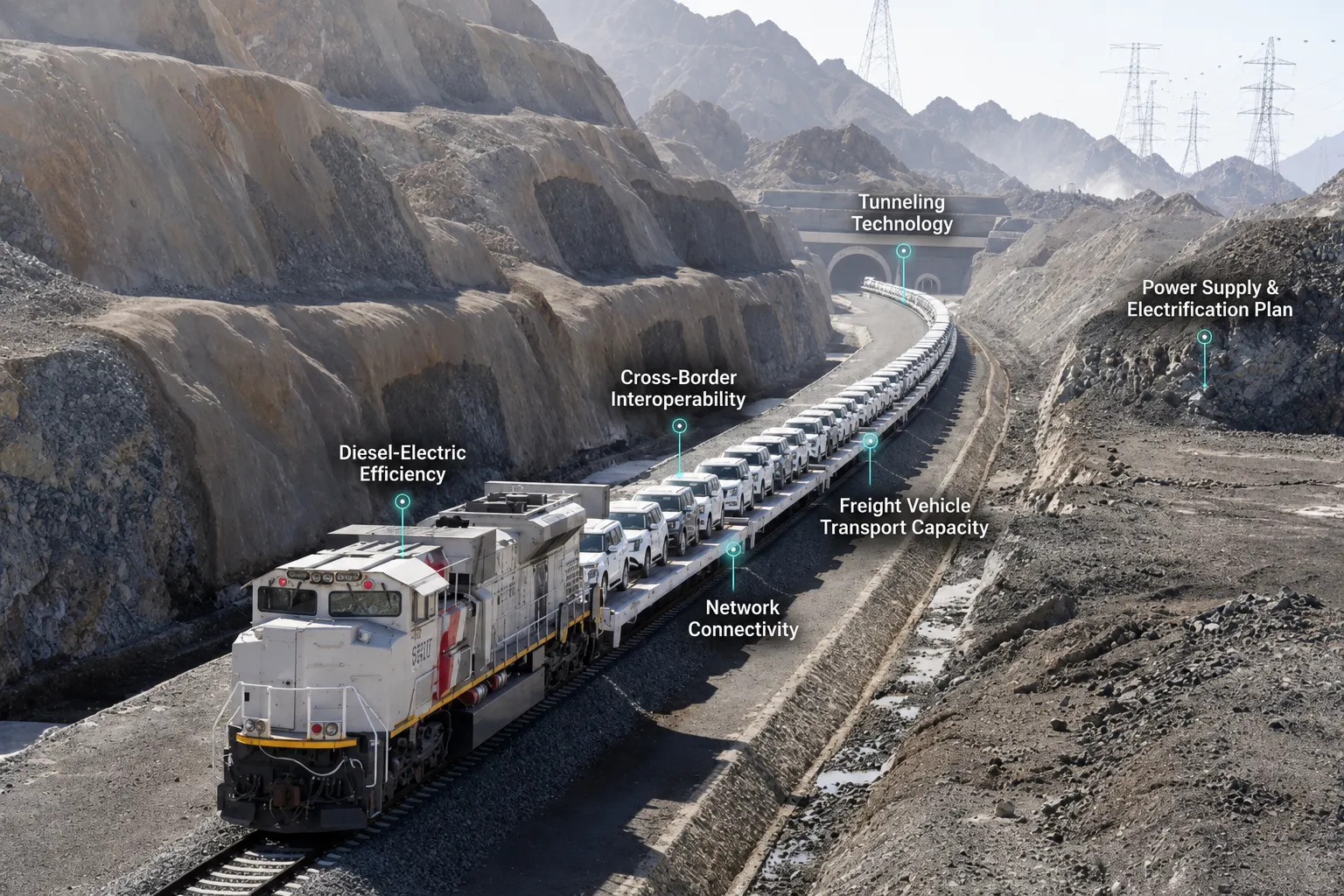
6. The UAE-Oman Rail Link Is Already Setting the Standard
Among all the planned cross-border routes, the UAE-Oman connection is one of the most advanced.
The Hafeet Rail project is often viewed as a practical example of how regional railway cooperation can work successfully.
The project is designed to improve transport links between major industrial and logistics centres in both countries while also supporting passenger travel.
More importantly, it gives businesses a real-world example of cross-border rail operations in the Gulf.
If the project performs well, it could encourage greater confidence in the wider GCC Rail Network and accelerate investment in future railway connections across the region.
Why the GCC Rail Network Matters
The GCC Rail Network is far more than a transportation project.
It has the potential to:
- Boost regional trade
- Improve logistics efficiency
- Increase tourism
- Create new investment opportunities
- Strengthen economic integration
- Reduce transportation costs
- Improve cross-border connectivity
By linking cities, ports, industrial areas and economic zones, the railway will help Gulf countries work together more closely and create a more connected regional economy.
For businesses, it means faster supply chains.
For passengers, it means easier travel.
And for governments, it represents an investment in long-term economic growth.
When Will the GCC Rail Network Be Completed?
Gulf countries are currently working towards completing the network by December 2030.
Several sections are already operational, while others are under construction or in advanced planning stages.
Although challenges remain, particularly around cross-border coordination and infrastructure development, the project has regained momentum in recent years.
With more than 50 per cent of the network already completed, the vision of a connected Gulf railway system is closer than ever before.
Conclusion
The GCC Rail Network is set to become one of the most important infrastructure projects in the Middle East.
By connecting six Gulf nations through a modern railway system, the project promises to transform transportation, trade, tourism and logistics across the region.
As construction progresses toward the 2030 target, the railway is expected to reshape the Gulf economy, create new business opportunities and strengthen regional ties for generations to come.
The tracks are still being laid, but the future of Gulf connectivity is already taking shape.