

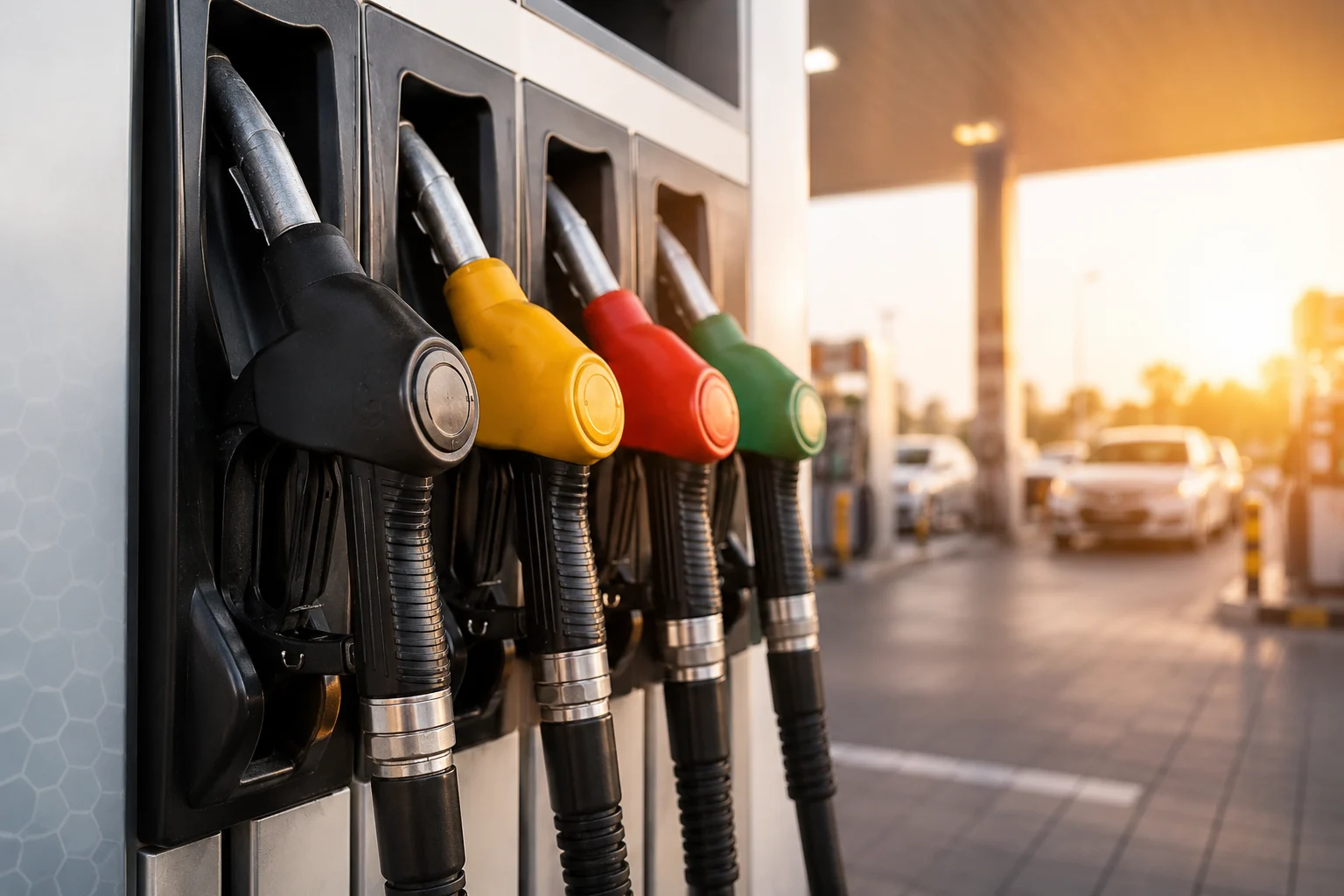
Motorists across the UAE are waiting for the announcement of petrol and diesel prices for August 2026, which is expected later this month. The update comes after July brought welcome relief, with fuel prices falling significantly following three straight months of increases.
Although the latest reduction eased pressure on household budgets and business operating costs, fuel remains noticeably more expensive than it was earlier this year. The upcoming price revision will once again depend on movements in the global oil market, which continues to experience volatility.
July Brought Relief After Months of Rising Fuel Costs
Fuel prices climbed steadily between April and June as global crude oil prices rose amid geopolitical tensions and supply concerns. However, the Fuel Prices Monitoring Committee approved a broad reduction in July, marking the first price cut in several months.
Current retail prices for July 2026 are:
- Super 98: AED 3.40 per litre
- Special 95: AED 3.29 per litre
- E-Plus 91: AED 3.21 per litre
- Diesel: AED 3.60 per litre
Compared with June, these reductions represented one of the biggest monthly declines seen this year. Diesel recorded the largest drop, while all petrol grades also became noticeably cheaper.
Fuel Prices Remain Higher Than Earlier This Year
Despite the July decrease, motorists are still paying much more than they were at the start of 2026.
In February, fuel prices were significantly lower:
| Fuel Type | February 2026 | July 2026 |
|---|---|---|
| E-Plus 91 | AED 2.26 | AED 3.21 |
| Special 95 | AED 2.33 | AED 3.29 |
| Super 98 | AED 2.45 | AED 3.40 |
| Diesel | AED 2.52 | AED 3.60 |
Compared with February, petrol and diesel prices remain around 39% to 43% higher, highlighting how global energy markets have continued to influence local fuel costs despite the recent correction.
What Could Influence August Fuel Prices?
The UAE reviews petrol and diesel prices every month under a market-based pricing system introduced in 2015. Retail rates are linked to international oil prices, refining costs, and other global market conditions.
Several factors are likely to shape August's fuel prices, including:
- Global crude oil price movements
- Supply and demand across international energy markets
- Geopolitical developments affecting oil-producing regions
- Shipping and refining costs
- Currency and commodity market trends
If oil prices remain stable or continue to soften, motorists could see another modest reduction. However, any renewed supply disruptions or geopolitical tensions could quickly reverse the recent downward trend.
UAE Continues Market-Based Fuel Pricing
Since deregulating fuel prices in 2015, the UAE has adjusted petrol and diesel rates every month to reflect international market conditions.
Temporary price controls were introduced during the COVID-19 pandemic in 2020 to shield consumers from market volatility. Those controls were lifted in March 2021, allowing monthly price reviews to resume.
Today, the country's pricing mechanism ensures that local fuel costs closely track developments in the global energy market.
Looking Ahead
With the August announcement approaching, drivers and businesses alike will be watching international oil prices closely. Lower fuel costs can ease transportation expenses and reduce operating costs for many industries, while any increase would add renewed pressure to household and business budgets.
Although July delivered welcome savings at the pump, fuel prices remain well above the levels seen earlier this year, meaning the next monthly update will be closely monitored across the UAE.