
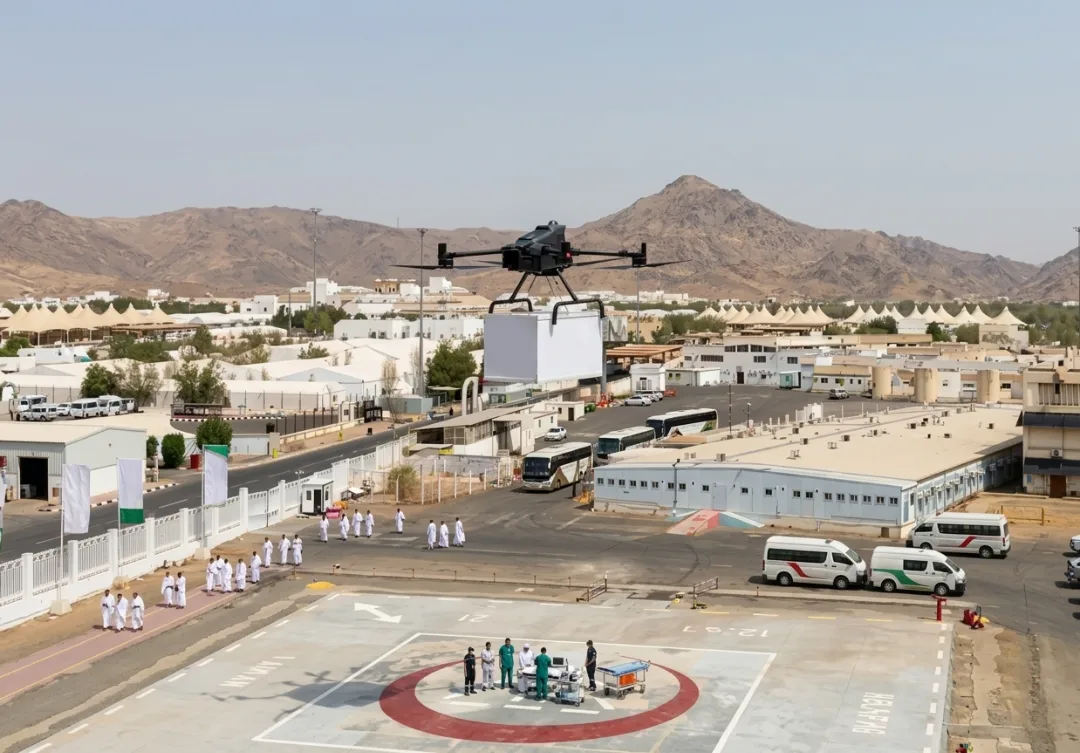
Saudi Arabia has officially launched its first drone-based medicine delivery service during the Hajj season, marking a major step forward in the Kingdom's efforts to integrate advanced technology into healthcare and public services.
The initiative follows the issuance of Saudi Arabia's first operational permit for medical drone deliveries by the General Authority of Civil Aviation (GACA). The permit allows medicines and essential medical supplies to be transported by drones within the holy sites in Makkah, where millions of pilgrims gather every year.
The new service is expected to improve the speed and efficiency of healthcare logistics during one of the world's largest annual religious events.
First Official Permit for Medical Drone Deliveries
The permit has been granted to Terra Drone Arabia, enabling the company to carry out controlled drone deliveries of medicines and healthcare supplies during the 1447 AH Hajj season.
According to GACA, the project is part of Saudi Arabia's broader strategy to modernize its aviation sector and encourage the use of innovative technologies that enhance services for pilgrims.
Authorities emphasized that all drone operations will follow strict safety regulations and international aviation standards to ensure reliable and secure deliveries.
Faster Medical Support for Millions of Pilgrims
Every year, Hajj brings together millions of pilgrims from around the world, creating enormous logistical and healthcare challenges.
Delivering medicines quickly during emergencies or high-demand periods is crucial. Traditional transportation methods can sometimes face delays because of heavy crowds and restricted vehicle movement around the holy sites.
Drone technology offers a practical solution.
By flying directly to healthcare facilities and designated delivery points, drones can transport urgent medicines and medical supplies much faster, helping healthcare teams respond more efficiently when time is critical.
Officials believe the service will improve healthcare readiness and support smoother medical operations throughout the pilgrimage season.
Part of Saudi Vision 2030
The launch of the drone medicine delivery service is closely aligned with Saudi Arabia's Vision 2030 agenda, which focuses on innovation, digital transformation, and the adoption of emerging technologies across different sectors.
Over the past few years, Saudi Arabia has invested heavily in smart infrastructure, artificial intelligence, automation, and advanced aviation technologies. The goal is not only to improve public services but also to position the Kingdom as a global leader in innovation.
The medical drone project is another example of how technology is being used to create smarter and more efficient services for residents and visitors alike.
Built on Successful Pilot Trials
The official rollout did not happen overnight.
GACA confirmed that the approval followed successful pilot tests conducted during previous Hajj seasons. These trials demonstrated that drone deliveries could operate safely and effectively in the challenging environment of the holy sites.
The positive results gave regulators confidence to move forward with a full operational permit, making this the first officially authorized medical drone delivery service in Saudi Arabia.
Industry experts see this as a significant milestone for the Kingdom's aviation and healthcare sectors.
Improving Logistics in High-Density Areas
One of the biggest advantages of drone technology is its ability to operate efficiently in crowded locations.
During Hajj, roads are often congested and access to certain areas can be limited. In such situations, drones can provide a fast and flexible alternative for transporting essential supplies.
Medical teams can receive urgent medications, equipment, and healthcare materials without relying solely on traditional ground transport.
This not only improves response times but also helps reduce pressure on existing logistics systems during peak pilgrimage periods.
A Glimpse Into the Future of Healthcare Delivery
Saudi Arabia's investment in drone technology extends beyond Hajj.
Experts believe drone logistics could eventually play an important role in healthcare delivery across the Kingdom, particularly in remote locations, emergency response situations, and large-scale public events.
As regulations evolve and technology advances, drones may become a regular part of medical supply chains, offering faster and more efficient services to hospitals and healthcare providers.
The Hajj medicine delivery project is being viewed as an important testing ground that could shape the future of healthcare logistics in Saudi Arabia.
Conclusion
The launch of Saudi Arabia's first drone medicine delivery service represents an important milestone in the Kingdom's journey toward smarter and more innovative public services.
By using drones to transport medicines and healthcare supplies during Hajj, Saudi Arabia is improving medical response times, enhancing operational efficiency, and showcasing how technology can solve real-world challenges.
As part of Vision 2030, this initiative highlights the country's commitment to innovation and offers a glimpse into a future where advanced technologies play a bigger role in healthcare, aviation, and everyday life.